Fruit Storage Containers: The Complete Buying Guide
Keep berries, grapes, and cut fruit fresh longer with smart storage. We break down what actually works, what to look for, and our top pick.
Quick Answer
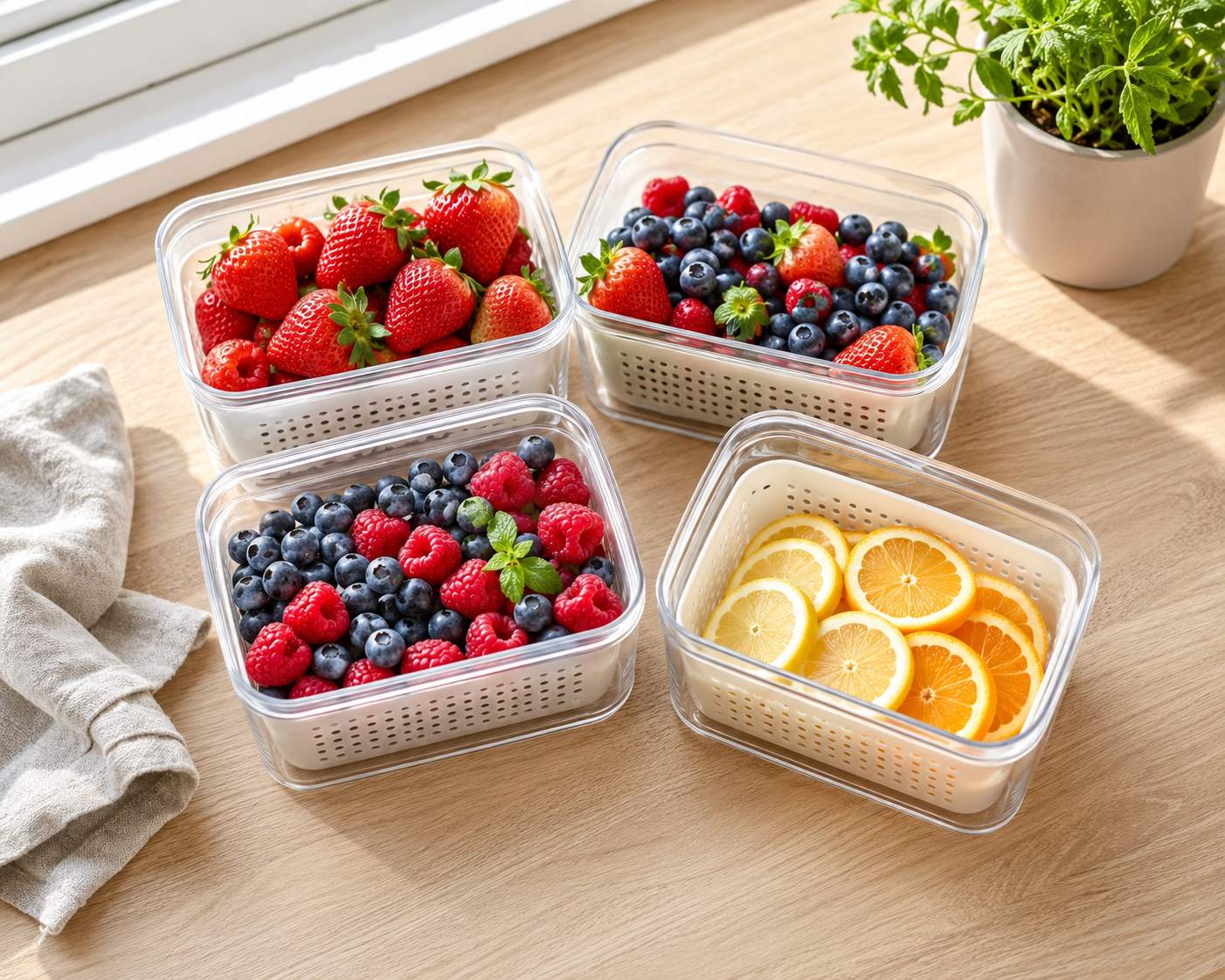
Produce spoils fast in a regular fridge mainly because of trapped moisture and poor airflow. The right fruit storage containers fix this with a removable colander insert that lifts food above any condensation, combined with an airtight seal. If you only remember one thing from this guide: drainage matters more than any other single feature.
If you’ve ever pulled a “fresh” bag of berries out of the fridge only to find half of them soft or moldy, the problem usually isn’t the fruit — it’s how it was stored. Regular containers trap the moisture that produce naturally releases, and that trapped moisture is what speeds up spoilage. This guide walks through what actually works, what to look for before you buy fruit storage containers, and which option is worth considering right now.
What’s in This Guide
Why Fresh Produce Spoils Fast in a Regular Fridge
Fruits and vegetables continue to release moisture and, in many cases, ethylene gas after they’re picked. In a sealed bag or a flat-bottomed container, that moisture has nowhere to go — it collects at the bottom, sits directly against the food, and creates the damp environment that mold and bacteria need to take hold. Poor airflow makes this worse, since stagnant, humid air around produce accelerates softening and browning.
What to Look for in a Fruit Storage Container
A Removable Colander or Drainage Insert
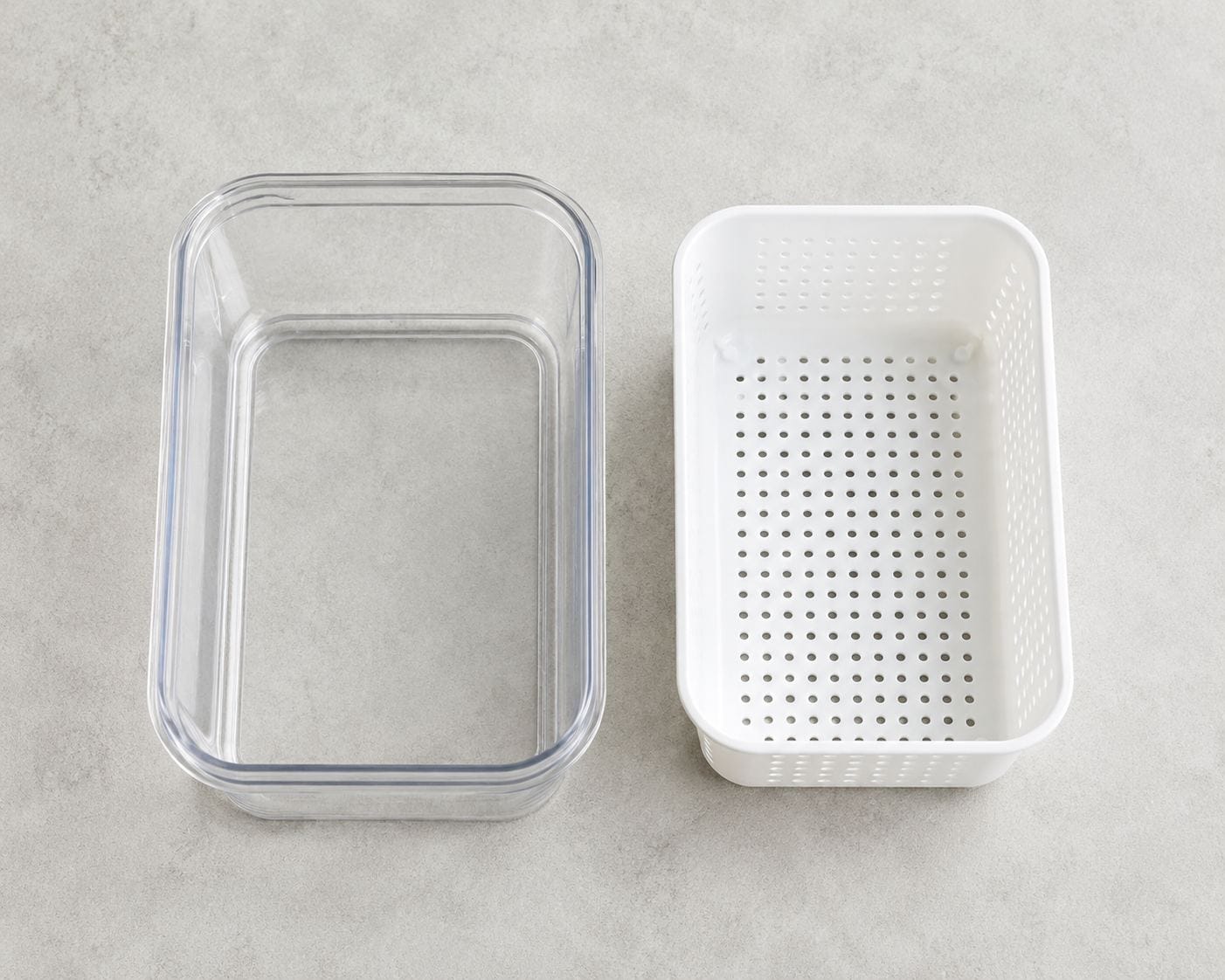
This is the single most important feature. A raised, perforated insert lets water drip away from the fruit instead of pooling underneath it. It also lets you rinse produce directly in the container and let it drain before sealing the lid — one less dish to wash.
An Airtight (or Near-Airtight) Seal
A sealed lid slows the exchange of air and keeps odors from other fridge items away from delicate produce like berries. It’s not a substitute for drainage — the two features work together.
Size Range That Matches How You Actually Shop
Most sets come with multiple sizes, from small (berries) to large (bulk greens or a full fruit haul). Buying a set with size variety is usually more useful than several containers of the same size.
Dishwasher-, Freezer-, and Microwave-Safe Material
Food-grade polypropylene (PP) is the most common material in this category and is generally safe across all three uses — but always check the specific listing, since not every lid is dishwasher-safe even when the base is.
Stackability
If fridge space is tight, look for containers designed to nest or stack — it’s a small detail that makes a real difference in a standard-depth fridge shelf.
Types of Fruit Storage Containers, Compared
Colander-Insert Container
Best for berries, cut produce, and anything that sweats. Active drainage keeps food elevated above condensation.
Vented Storage Bin
Best for leafy greens and herbs. Passive airflow through vents suits produce that wilts under a fully sealed lid.
Silicone Wrap / Pouch
Best for cut fruit or half a lemon or avocado. Minimal drainage, relies on the material itself to slow moisture loss.
Best Storage Approach by Fruit Type
Not all produce fails the same way, so the best fruit storage containers setup depends partly on what you’re storing:
Berries
The most moisture-sensitive category — a colander insert helps the most here. Keep berries unwashed until just before eating, rinsing in the colander right before serving.
Leafy Greens
Generally do better with more airflow than a fully airtight seal provides. Some ventilation often outperforms a completely sealed container for greens.
Citrus
Holds up longer at fridge temperature and is less dependent on a specialized container — usually the lowest-priority produce to buy one for.
Bananas & Stone Fruit
Release ethylene gas as they ripen. Keep separate from ethylene-sensitive produce like leafy greens — placement matters more than any container feature.
Common Mistakes to Avoid
- Washing produce and storing it wet without draining. This adds moisture right when you’re trying to remove it — always let produce drain in the colander before sealing the lid.
- Choosing a fully airtight container with no drainage for high-moisture fruit. Airtight alone traps condensation against the food; it needs to be paired with drainage, not used instead of it.
- Overfilling the container. Airflow around the food still matters even with a good drainage system.
- Storing ethylene-producers next to ethylene-sensitive produce in the same sealed space. More about placement than container features, but an easy habit to fix.
Price vs. Value: What You’re Actually Paying For
Fruit storage containers roughly fall into two price bands, and the difference is usually about completeness of design rather than raw material cost:
Budget (~$10–$20)
Often thinner plastic, and sometimes only the largest container in the set includes a colander insert, with smaller ones relying on the seal alone.
Mid-Range (~$20–$35)
Typically include a colander in every size, sturdier locking lids, and better stackability.
Glass alternatives usually cost more mainly because glass itself is a heavier, pricier material to manufacture and ship — not necessarily because glass stores produce meaningfully better than a well-designed plastic set with a proper colander insert.
Our Top Pick for 2026
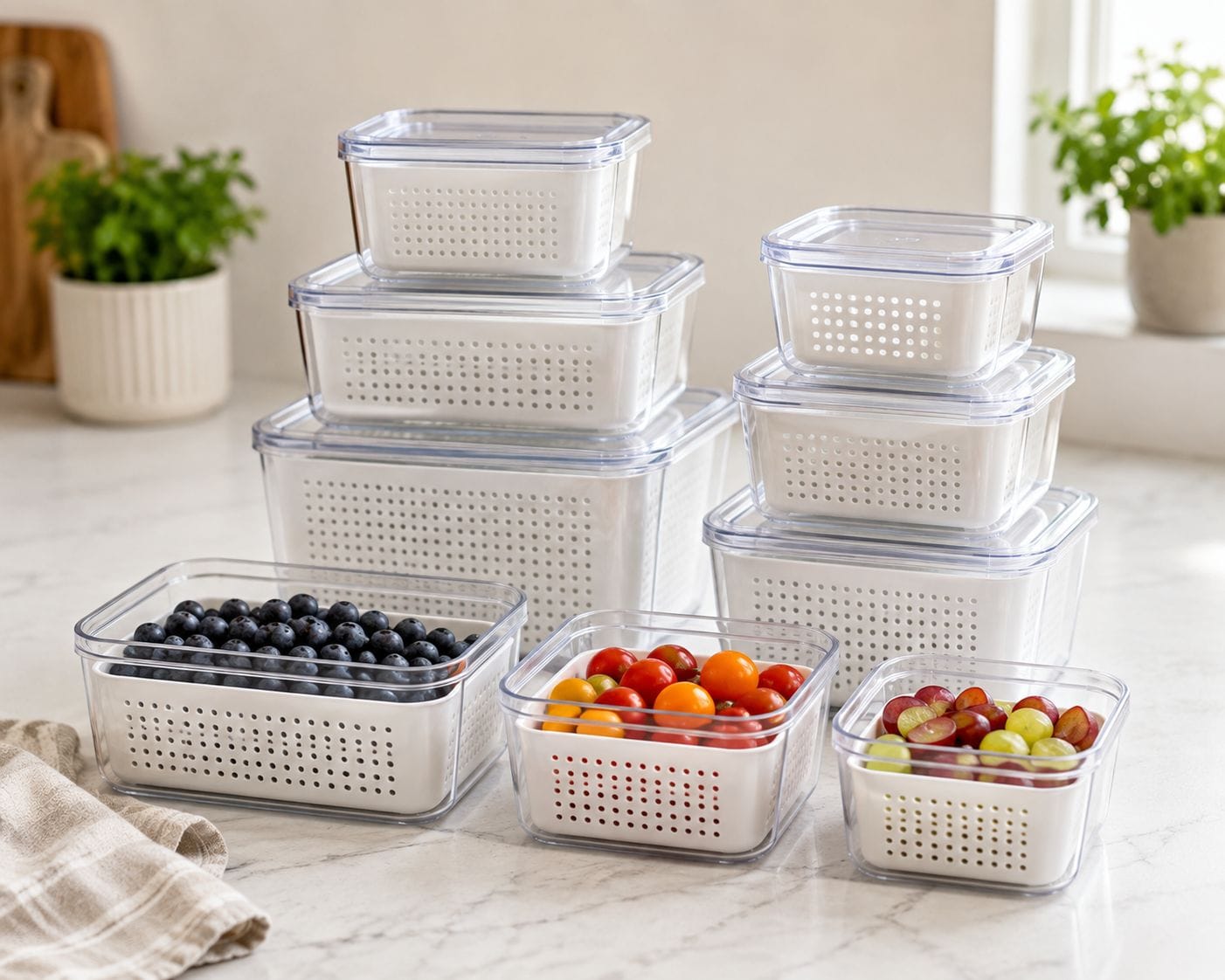
8 PCS Fruit Storage Containers for Fridge, Leakproof, with Removable Colander
An 8-piece set in four sizes (0.34, 0.87, 1.7, and 2.85 qt, two of each), each with its own removable colander insert. Made of food-grade polypropylene.
Pros
- Colander insert in every size
- Four sizes cover berries through a full bag of produce
- Dishwasher, freezer, and microwave safe
Cons
- Plastic — not for those who want glass
- Larger sizes take up more shelf depth stacked
Amazon link will carry our tracking ID once Associates approval is confirmed — currently a plain product link only.
Fruit Storage Containers vs. Regular Containers
A regular food storage container and a dedicated fruit/produce container often look similar, but the difference is almost always the drainage layer. Regular containers are built to hold liquid in (soup, leftovers); produce containers are built to keep liquid away from the food. Using a regular flat-bottomed container for berries isn’t wrong, it just means you’re skipping the one feature that most directly slows spoilage.
How to Use a Produce Saver Container for Best Results
- Rinse produce directly in the colander insert, then let it sit for a few minutes so excess water drains through.
- Pat dry any obviously wet spots before sealing — the colander handles ongoing moisture, not a soaking-wet initial load.
- Don’t overfill; airflow around the food still matters.
- Empty and rinse the drainage tray every few days, especially for high-moisture fruit like berries.
Frequently Asked Questions
Do fruit storage containers actually work?
Yes, in the sense that they address a real, specific cause of spoilage — trapped moisture. They won’t make produce last indefinitely, and results vary by fruit type and how fresh it was when purchased, but separating food from condensation is a legitimate way to slow spoilage compared to a sealed bag or flat container.
How do you use a fruit storage container?
Wash produce in the removable colander, let it drain, then place the colander back into the base and seal the lid. Store in the fridge and empty any collected water from the base periodically.
Are fruit storage containers dishwasher safe?
Most food-grade polypropylene sets are, but always check the specific product listing — some lids or seals are hand-wash-only even when the base isn’t.
Glass or plastic — which is better for fruit storage?
Glass resists staining and odor better and is easier to see into, but is heavier and less common in colander-insert designs. Plastic is lighter, more common in produce-specific sets, and generally more affordable. Neither material affects how well the drainage feature itself works.
Do berries and leafy greens need different storage containers?
Their ideal setups differ. Berries benefit most from a colander insert that actively drains moisture. Leafy greens generally do better with some airflow rather than a fully airtight seal, since too little ventilation can accelerate wilting.
Dry Before Storing
Remove excess water before placing in the container.
Check & Empty
Drain collected water regularly to prevent spoilage.
Don’t Overfill
Allow airflow for better freshness and longer shelf life.
Store Smart
Keep produce in the right crisper or shelf for best results.
Bottom Line
If food waste from spoiled produce is a recurring problem in your kitchen, fruit storage containers with a built-in colander insert are the single upgrade most likely to help — more than switching plastic to glass, and more than buying a bigger fridge organizer. Start with one or two sizes for whatever you buy most (usually berries), rather than a full set, if you’re not sure it’ll fit your routine.