Buying Guides
How to Choose the Right Kitchen Products — Before You Compare Specific Picks
Most kitchen products that disappoint people aren’t cheap products — they’re products bought without knowing what to check first. This kitchen buying guide walks through the buying factors that actually separate a good container or accessory from one that fails in three weeks: materials, sizing, lid design, safety ratings, and where a lower price genuinely costs you something later.
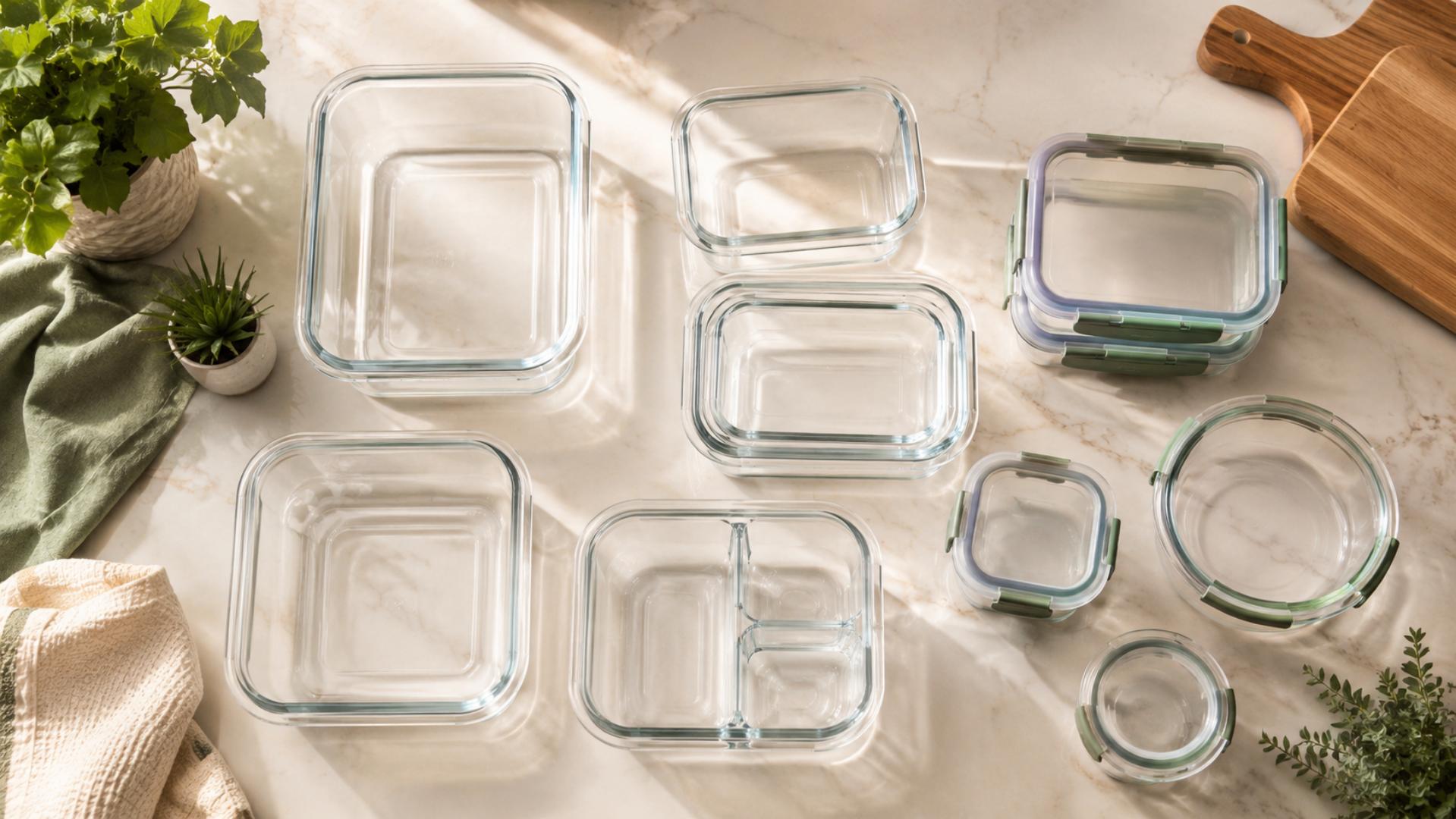
What This Kitchen Buying Guide Covers
This is not a ranking. If you already know roughly what you want and you’re looking for our specific recommendations, our Best Picks page ranks products by category based on our research. This page is the step before that — it explains what the labels and listings actually mean, so you can judge any product against real criteria, whether it’s one of ours or something you found on your own.
Every section below covers one buying factor in isolation, because that’s usually how people get talked out of the right decision — one flashy feature (a color, a bundle discount, a five-star badge) distracts from the two or three things that actually determine whether a product survives real use.
Why the Listing Isn’t Enough
A product listing is written to get you to click “buy,” not to tell you how the item behaves after week three. “Leak-proof” on a listing usually means it passed a shake test in a lab, not that it will survive a bag with a laptop pressed against it on a commute. “Freezer safe” often just means the material won’t shatter at low temperature — it says nothing about whether the lid will still seal properly after ten freeze-thaw cycles.
None of that is dishonest, exactly — it’s just incomplete. The gap between “technically true on the listing” and “actually works for how you’ll use it” is what the rest of this guide is trying to close.
Five Questions to Answer Before You Shop
Answering these first will narrow your options faster than reading any spec sheet.
Materials, Explained
The material decision drives almost every other decision on this page, so it’s worth understanding before anything else.
Glass
Look for “borosilicate” specifically — it resists thermal shock and is the type actually rated for oven use. Plain “glass” or “soda-lime glass” is fridge, microwave, and dishwasher safe in most cases, but not built for direct oven heat and is more prone to cracking with sudden temperature swings. Glass is heavier and more breakable in transit, but resists staining and odor retention better than any plastic.
Plastic
“BPA-free” describes one specific chemical being absent — it doesn’t guarantee the plastic resists staining, odor, or warping under repeated heat. Polypropylene (often marked #5) is generally the more heat-stable, dishwasher-durable option among food-grade plastics. Lighter and cheaper than glass, but plan to replace it sooner.
Stainless Steel
Excellent for durability and won’t hold odors, but it isn’t microwave safe and rarely has a fully transparent lid, which makes it harder to see what’s inside. Best suited to dry storage, cold transport, or freezer use where you won’t need to reheat in the same container.
For a full side-by-side comparison across durability, safety, and cost, see our glass vs. plastic comparison.
Size & Capacity Guide
Capacity matters more for consistency than convenience. If you’re tracking portions for a specific goal, a container that holds a slightly different volume every time you fill it works against you — visually estimating “about the same as last time” is far less reliable than a container sized to the amount you actually want to eat.
Multi-compartment containers help with portion separation (protein, carb, vegetable) but reduce total capacity per container, so they usually suit smaller, calorie-conscious meals better than large family-style portions. If you’re prepping around specific intake targets, our meal prep container picks for weight loss go into exact volume ranges that matter for that use case specifically.
Lid & Leak-Proof Guide
Lid mechanisms generally fall into three tiers: press-fit lids (cheapest, least reliable under pressure or on their side), single or two-clip lids (better, but can loosen with repeated use), and four-clip locking lids with a silicone gasket (most reliable for genuinely wet or liquid contents).
“Leak-resistant” and “leak-proof” are not interchangeable claims, even when listings use them that way — leak-resistant generally means it won’t drip when upright and undisturbed; leak-proof implies it survives being turned upside down or knocked around in a bag. If your meals include dressing, sauce, or soup, this distinction is worth checking before you buy, not after the first spill. Our container picks for salads specifically evaluate this for wet-ingredient use cases.
Microwave, Freezer & Dishwasher Safety
These three labels get treated as one generic “safe to use however” claim, but each one covers a narrower condition than most buyers assume.
Microwave safe very often means lid removed — many locking lids are not rated for microwave use even when the base container is, because the plastic used in the clip mechanism behaves differently under heat than the container body. Check the lid rating separately from the container rating.
Freezer safe mainly concerns whether the material resists cracking at low temperature — it doesn’t account for liquid expansion. Filling a container completely before freezing anything with high water content is one of the more common causes of a cracked lid or warped seal, regardless of how the container was rated. For general guidance on food-safe storage practices, the USDA’s cold food storage charts are a useful reference point.
Dishwasher safe is a durability claim more than a one-time promise — plastic in particular can slowly warp or cloud with repeated hot-cycle exposure over months, even when it’s rated as dishwasher safe. Top-rack placement, away from direct heating elements, generally extends the life of plastic containers considerably. For background on food-contact material standards, see the FDA’s guidance on food packaging and contact substances.
For a deeper look at how different materials specifically hold up to repeated freezing, see our freezer durability comparison.
Budget vs. Premium: What You’re Actually Paying For
Higher-priced containers generally aren’t charging you for the basic function — most containers at any price point will hold food. The price difference usually buys three specific things: thicker glass walls (more resistant to thermal shock and chipping), better gasket material in the lid seal (slower to degrade, better leak resistance over years rather than months), and manufacturer warranty or replacement-parts support if a lid is lost or a gasket wears out.
None of that matters equally for every buyer. If your use case is occasional, dry-food, fridge-only storage, a budget set is a reasonable, deliberate choice — not a compromise. Our budget container picks specifically evaluate which lower-cost sets hold up despite the lower price, rather than which ones are simply cheapest.
Common Buying Mistakes
- Buying a full matched set before measuring your actual fridge shelf height and depth.
- Assuming “BPA-free” plastic is automatically stain- and odor-resistant — it isn’t a related property.
- Discovering the lid’s leak rating only after the first spill, instead of checking the clip and gasket type up front.
- Paying for oven-safe borosilicate glass when your actual use case never leaves the fridge or microwave.
- Choosing a uniform-size matched set for a household that actually needs two or three different portion sizes.
- Freezing a container completely full of a liquid-heavy meal without leaving expansion room.
Frequently Asked Questions
Neither is universally better — it depends on how you’ll use it. Glass resists staining, odor, and holds up better to oven and long-term reheating use, but it’s heavier and can crack if dropped or thermally shocked. Plastic is lighter and cheaper, better suited to daily commuting, but tends to stain, retain odor, and degrade faster with dishwasher heat over time.
Most single-meal containers fall between 20–35 oz for a balanced plate, and 30–45 oz if you’re including a larger carb portion. Multi-compartment containers usually run smaller per section since they’re built for portion separation, not volume. Consistency matters more than picking the “biggest” size — see our size & capacity section above for how to match volume to your actual meals.
The container matters less than the food itself — most cooked meals stay safe and fresh for 3–4 days refrigerated, regardless of glass or plastic, as long as the lid seals well and the food was cooled before sealing. For a full breakdown by food type, see our complete fridge-storage guide.
Yes — a sealed lid keeps the fridge’s other odors out, keeps the oats from drying out on top, and makes the jar safe to shake or transport. It doesn’t need to be airtight in the leak-proof sense, but a proper lid (not just plastic wrap) makes a real difference in texture after a full night. Our overnight oats container guide covers jar sizes and lid types specifically for this use case.
A common starting point is enough containers for the meals you’ll actually prep in one session, plus a small buffer for wash-day gaps — for most single-person routines that lands around five to seven. Buying more than that upfront before you know your actual prep rhythm often just adds clutter.
It usually refers to the container base only. Many locking lids use a different plastic than the base and aren’t rated for microwave heat — check whether the rating applies with the lid on or off before assuming you can reheat with it sealed.
Most glass and plastic containers marketed for meal prep are freezer-rated for the material itself, but the real risk is liquid expansion, not the material failing on its own. Leaving headspace for liquid-heavy meals matters more than which brand you bought.
Generally yes, if leak resistance actually matters for what you’re storing. Higher-priced sets tend to use more durable gasket material that holds its seal longer. If your meals are dry and fridge-only, a basic clip lid is usually enough and the extra cost buys you little.
This kitchen buying guide explains the buying factors themselves — materials, sizing, lid types, safety ratings — so you can evaluate any product on your own. Best Picks applies those same factors to specific products we’ve researched and ranked by category.
Helpful Resources
- How to Choose Meal Prep Containers — the complete framework Read guide →
- Glass vs. Plastic — full material comparison Read comparison →
- How Long Meal Prep Lasts in the Fridge Read guide →
- Freezer Durability by Material Read comparison →
- Is Ello a Good Brand? Duraglass Refresh Reviewed Read review →
Our Editorial Promise
Ready to See Specific Products?
Now that you know what to check, our Best Picks page applies these same factors to the products we’ve actually researched.