Choosing between glass vs plastic meal prep containers comes down to how you use them. Glass lasts longer and reheats safely. Plastic costs less and weighs less. This guide shows exactly which one fits your lifestyle.
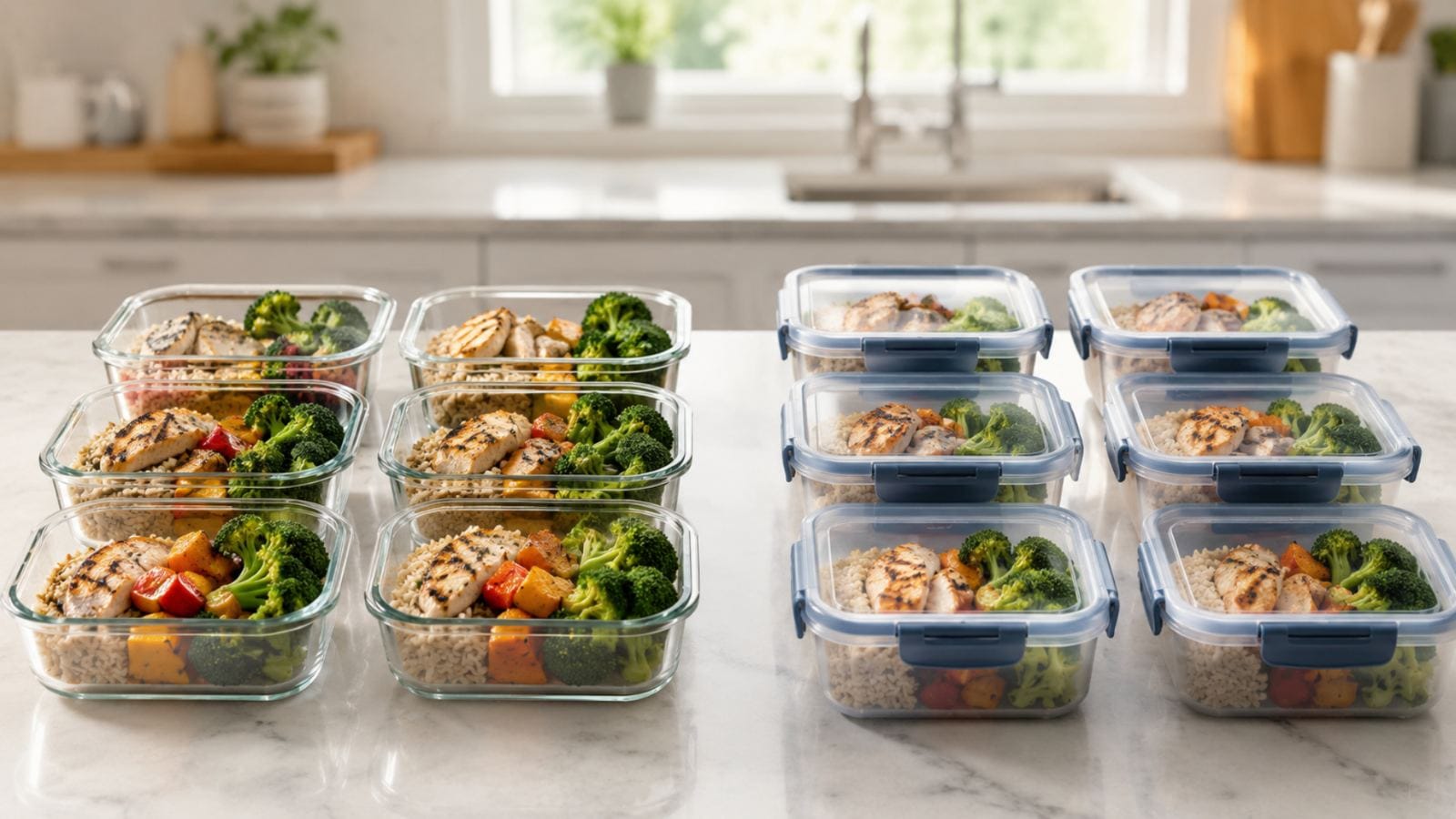
glass vs plastic meal prep containers comparison
Glass vs Plastic Meal Prep Containers: Full Comparison
Quick Answer
Glass containers last longer, don’t stain, and are safer for reheating. Plastic containers cost less and weigh less. For most home cooks doing serious meal prep, glass is the better long-term investment.
You’re standing in front of two meal prep containers at Target. One is glass. One is plastic. The glass one costs twice as much. You put the plastic one in your cart and move on.
Six months later, the plastic lids are warped, the containers smell like last Tuesday’s curry, and you’re back at Target doing the same thing again.
This guide breaks down exactly where glass wins, where plastic wins, and which one you should buy based on how you actually cook.
The Core Difference
Glass and plastic containers hold food. That’s where the similarity ends.
Glass is inert. It doesn’t absorb smells, doesn’t leach chemicals when heated, and doesn’t stain after one batch of tomato sauce. A glass container you buy today will look and perform the same in five years.
Plastic degrades. Heat, acids in food, and repeated washing slowly break down the material. Most budget plastic containers start warping or smelling within a year of daily use.
Glass vs Plastic: Side-by-Side
| Factor | Glass | Plastic |
|---|---|---|
| Price | $25–$50 for a set | $10–$25 for a set |
| Weight | Heavy (2–3x heavier) | Light, easy to carry |
| Durability | Lasts 5–10 years | Warps in 1–2 years |
| Odor absorption | Zero absorption | Absorbs smells over time |
| Stain resistance | Stain-proof | Stains from tomato, turmeric |
| Microwave safety | Body always safe; remove lid first | Only if BPA-free labeled, lid off |
| Oven safe | Yes (most brands) | No |
| Freezer safe | Yes | Yes |
| Leak resistance | Depends on lid quality | Depends on lid quality |
| Dishwasher safe | Yes | Most yes, but degrades faster |
| Chemical safety | No chemicals | Risk if not BPA-free |
| Long-term cost | Cheaper over 3+ years | Replace more often |
Where Glass Wins
Reheating Food
Glass is the only safe option for microwaving food directly in the container. Even BPA-free plastic can release compounds when heated repeatedly. With glass, you take the lid off and microwave. No risk, no questions.
Strong-Smelling Foods
Cook salmon, garlic shrimp, or curry in a plastic container and it will smell like that meal forever. Glass doesn’t absorb anything. Wash it once and it’s clean.
Long-Term Value
A $35 glass set that lasts 7 years costs less than buying two or three $15 plastic sets over the same stretch of use. The math starts favoring glass once you’ve replaced a plastic set two or three times — for most people, that’s somewhere around the two-to-three-year mark, not immediately.
Oven-to-Table Use
Oven-safe glass containers let you cook, store, and reheat in the same container. You’re washing one thing instead of three. For people who batch cook on Sundays, this matters.
Where Plastic Wins
Taking Food to Work
Dropping a glass container on concrete breaks it. Plastic survives. If you commute with your lunch, plastic is the practical choice.
Kids’ Lunches
Glass and children are a bad combination. Plastic is lighter, unbreakable, and easier for small hands to open.
Tight Budget
When you need containers now and have $10, plastic works. Just buy BPA-free, avoid microwaving with the lid on, and replace when warping starts.
Storing Dry Foods
For rice, oats, or snacks that don’t get reheated, the disadvantages of plastic disappear. It works fine for dry storage.
Glass Pros and Cons
✅ Pros
- Lasts years without degrading
- Zero odor or stain absorption
- Safe in microwave and oven
- No chemical leaching
- Cheaper long-term
- Easy to clean completely
❌ Cons
- Heavier to carry
- Breaks if dropped
- Costs more upfront
- Takes up more space
Plastic Pros and Cons
✅ Pros
- Lightweight and portable
- Cheaper upfront
- Shatterproof
- Wide variety of sizes
- Fine for dry storage
❌ Cons
- Warps with heat over time
- Absorbs smells and stains
- Chemical risk if low quality
- Needs replacing more often
- Not oven safe
Which One Should You Buy?
🟢 Buy Glass If You…
- Meal prep at home every week
- Reheat food in the container
- Cook strong-smelling foods
- Want containers that last years
- Use the oven regularly
- Prioritize chemical safety
🟠 Buy Plastic If You…
- Carry lunch to work daily
- Packing kids’ school lunches
- Need containers right now cheaply
- Storing dry foods only
- Replacing containers frequently anyway
Bottom Line
Glass is the better container for most home cooks. It costs more upfront, but it doesn’t warp, stain, or smell. Over two or three years, it costs less than replacing plastic sets.
If you commute with your food or pack kids’ lunches, keep one set of durable plastic for that purpose. Use glass for everything else.
The one thing to avoid: cheap plastic that isn’t labeled BPA-free. That’s where the real risk is.